KabulCapital
An independent MBCS information resource
Discover Afghanistan
Explore Afghanistan’s provinces, people, history, culture, economy, natural beauty and emerging opportunities through one trusted information platform.
34 provincesAdministrative divisions
Afghan afghani (AFN)Currency
Dari and PashtoMain languages
Afghanistan at a glance
Essential facts, clearly sourced
Durable facts and time-sensitive estimates are separated, dated and designed for straightforward updates.
Official name
Afghanistan
Common short form used internationallyCapital
Kabul
Largest urban centreGeographic region
South–Central Asia
At the crossroads of Central and South AsiaAdministrative divisions
34 provinces
Each province is divided into districtsPopulation
43.84 million
World Bank estimate, 2025Total area
About 652,230 km²
Widely cited total-area estimateCurrency
Afghan afghani (AFN)
Symbol: ؋Main languages
Dari and Pashto
Many additional languages are spokenTime zone
Afghanistan Time
UTC+4:30Calling code
+93
International telephone prefixCountry code
.af
Internet country-code top-level domainNational flag
Verify current official usage
State symbols and representations should be confirmed with current official sourcesMajor sectors
Agriculture, trade and services
Mining, energy, manufacturing and digital services offer potentialPopulation: World Bank, 2025 . Administrative, communications and cultural facts should be reconfirmed when used for formal decisions.
About Afghanistan
A country shaped by mountains, movement and exchange
Afghanistan sits at the meeting point of Central Asia, South Asia and the Iranian plateau. Its geography ranges from the high Hindu Kush and central uplands to fertile river valleys, northern plains and arid southwestern landscapes.
Afghan society is culturally and linguistically diverse. Communities sustain distinct regional traditions while sharing deep practices of hospitality, family responsibility, poetry, craft and exchange. Cities such as Kabul, Herat, Mazar-e-Sharif, Kandahar and Jalalabad connect provincial economies with wider regional networks.
For millennia, routes through the region carried ideas, technologies, religions, languages and goods. That history remains visible in archaeological landscapes, Islamic architecture, gardens, literature and living crafts. Today, agriculture, trade, services, natural resources, connectivity and a young entrepreneurial population inform the country’s economic potential.
Follow the historical timeline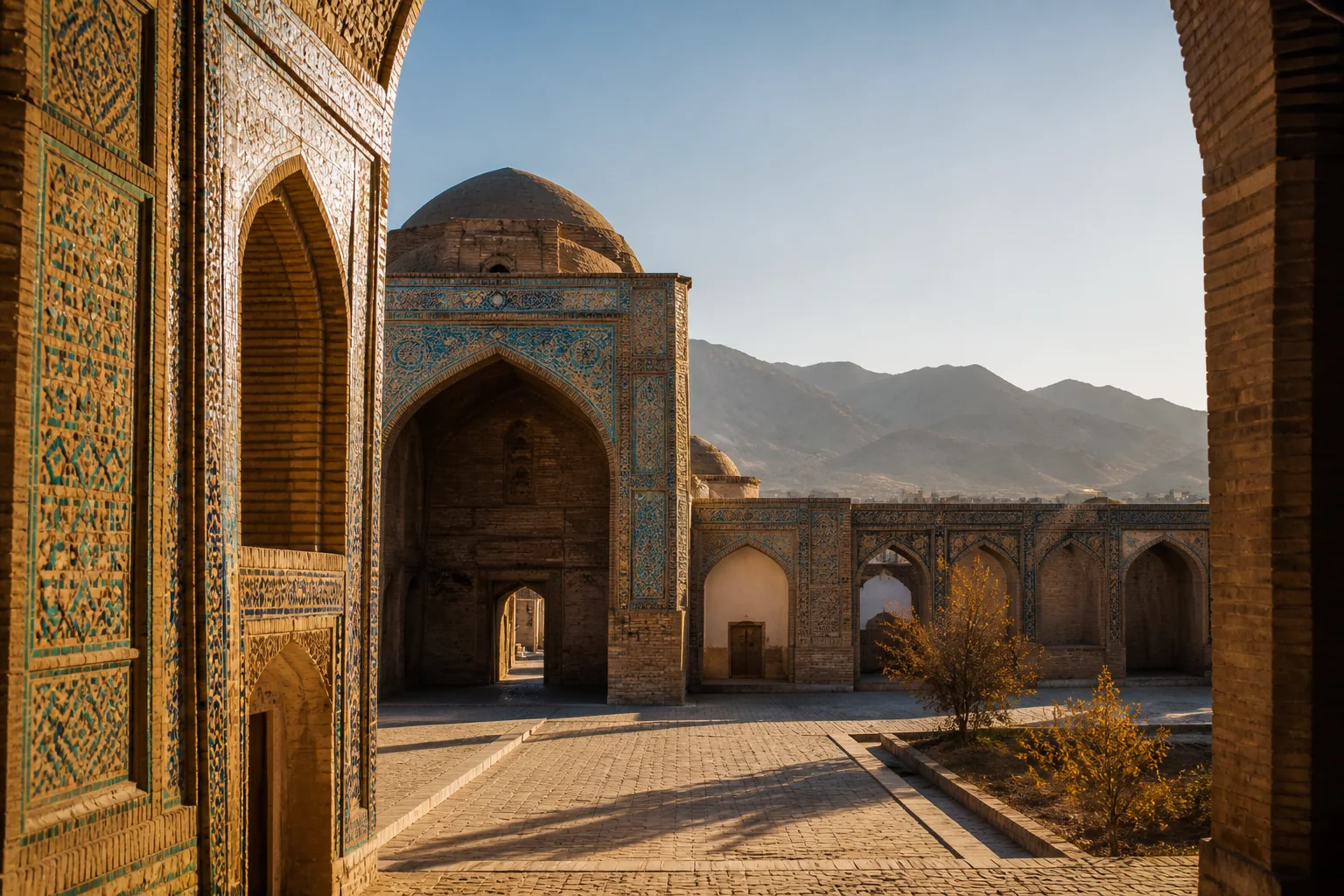
Featured cities and provinces
Six places to begin
Every province has its own geography, economy and cultural character. These introductions are an invitation to explore further.
North
Capital: Mazar-e-Sharif
Balkh
A centre of ancient Bactrian and Islamic history whose provincial capital is a major commercial and cultural hub.
Learn more
Central Highlands
Capital: Bamyan
Bamyan
A central highland province celebrated for its UNESCO-listed cultural landscape, mountain communities and Band-e-Amir lakes.
Learn more
West
Capital: Herat
Herat
A western centre of trade, architecture, poetry and scholarship, renowned for Timurid heritage and regional commerce.
Learn more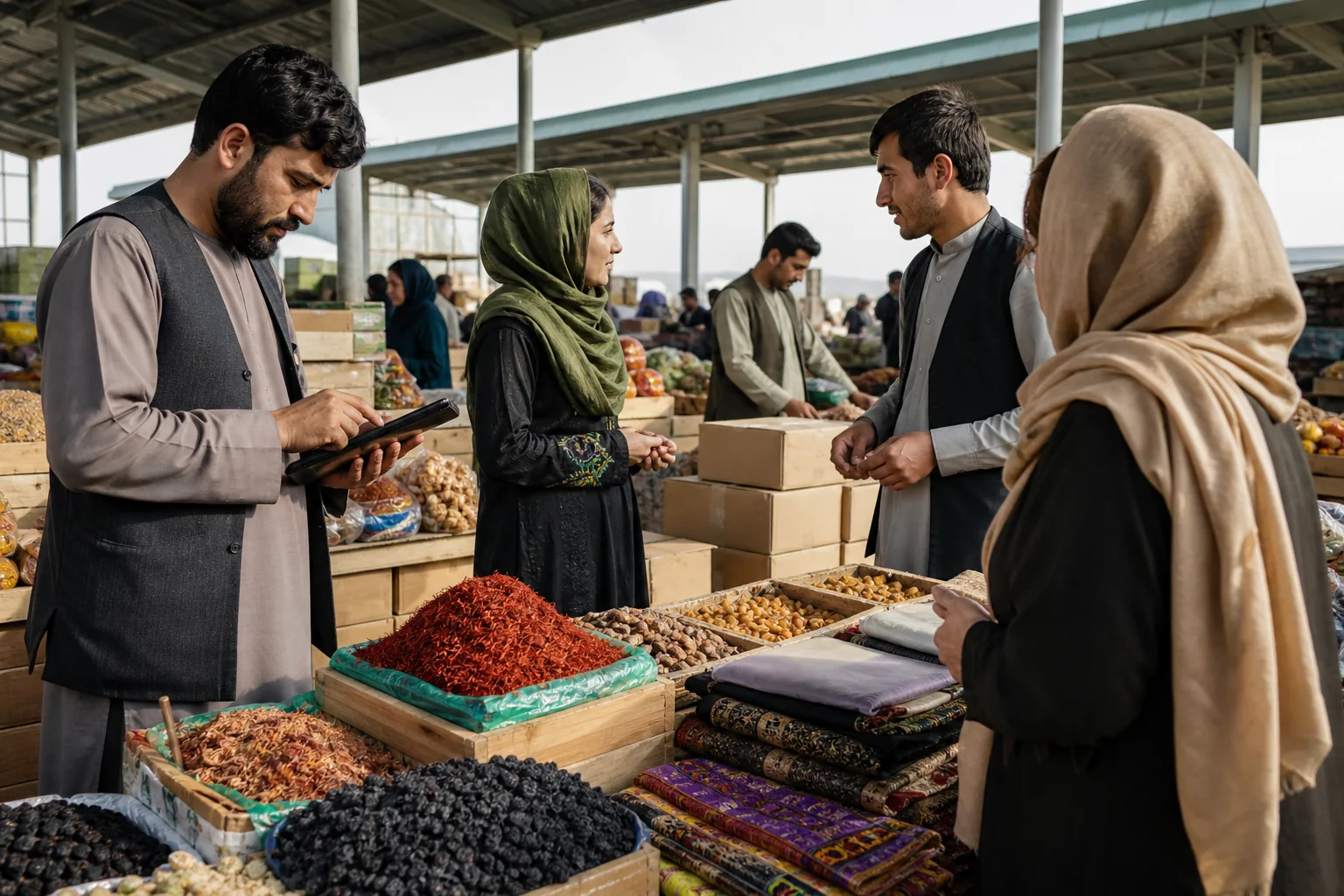 Central
Capital: Kabul
Kabul
The capital province and national urban centre, bringing together government, education, business, culture and communities from across Afghanistan.
Learn more
South
Capital: Kandahar
Kandahar
A major southern commercial and cultural centre with deep historical associations, agricultural production and regional trade.
Learn more
Central
Capital: Bazarak
Panjshir
A narrow mountain province north of Kabul, defined by the Panjshir River, steep valleys and close-knit communities.
Learn moreAll 34 provinces
Explore by region or name
Filter, search and sort the complete provincial directory. Each card opens a dedicated profile.
34 provinces shown
Northeast
Badakhshan
Capital: Fayzabad View profileWest
Badghis
Capital: Qala-e-Naw View profileNorth
Baghlan
Capital: Pul-e-Khumri View profileNorth
Balkh
Capital: Mazar-e-Sharif View profileCentral Highlands
Bamyan
Capital: Bamyan View profileCentral Highlands
Daykundi
Capital: Nili View profileWest
Farah
Capital: Farah View profileNorth
Faryab
Capital: Maymana View profileSoutheast
Ghazni
Capital: Ghazni View profileCentral Highlands
Ghor
Capital: Firozkoh View profileSouth
Helmand
Capital: Lashkar Gah View profileWest
Herat
Capital: Herat View profileNorth
Jowzjan
Capital: Sheberghan View profileCentral
Kabul
Capital: Kabul View profileSouth
Kandahar
Capital: Kandahar View profileCentral
Kapisa
Capital: Mahmud-i-Raqi View profileSoutheast
Khost
Capital: Khost View profileEast
Kunar
Capital: Asadabad View profileNorth
Kunduz
Capital: Kunduz View profileEast
Laghman
Capital: Mehtar Lam View profileCentral
Logar
Capital: Pul-i-Alam View profileEast
Nangarhar
Capital: Jalalabad View profileSouthwest
Nimruz
Capital: Zaranj View profileEast
Nuristan
Capital: Parun View profileSoutheast
Paktia
Capital: Gardez View profileSoutheast
Paktika
Capital: Sharana View profileCentral
Panjshir
Capital: Bazarak View profileCentral
Parwan
Capital: Charikar View profileNorth
Samangan
Capital: Aybak View profileNorth
Sar-e Pol
Capital: Sar-e Pol View profileNortheast
Takhar
Capital: Taloqan View profileSouth
Uruzgan
Capital: Tarinkot View profileCentral
Wardak
Capital: Maidan Shahr View profileSouth
Zabul
Capital: Qalat View profileNo provinces match those filters. Try a different search or region.
History of Afghanistan
A concise historical timeline
A neutral orientation to major periods. Dates and summaries are intentionally broad; specialist research should consult archaeological and historical scholarship.
01
Before 330 BCE
Ancient crossroads
Communities in the region participated in early Iranian, Central Asian and Indus-connected worlds. Achaemenid administration linked several areas to a wider imperial network.
02
c. 330 BCE–3rd century CE
Hellenistic and regional kingdoms
Campaigns associated with Alexander were followed by Greco-Bactrian, Mauryan, Indo-Greek and Kushan realms. Trade and artistic exchange connected cities and monasteries across Asia.
03
3rd–10th centuries
Buddhist and Islamic cultural centres
Bamyan and other centres supported Buddhist learning and art. From the seventh century onward, Islam spread gradually, and new urban, literary and scholarly traditions developed.
04
10th–13th centuries
Ghaznavid, Ghurid and successor eras
Ghazni and Ghor became capitals of influential states. Monumental architecture, Persianate literature and long-distance exchange flourished before Mongol-era upheaval.
05
14th–16th centuries
Timurid renaissance
Herat became a renowned centre of manuscript painting, poetry, architecture and scholarship under Timurid patronage, with influence far beyond the region.
06
18th–19th centuries
Formation of the modern Afghan state
The Durrani polity emerged in 1747. Through later dynastic and regional changes, the contours and institutions of the modern Afghan state took shape.
07
20th century
Reform and independence
Afghanistan pursued institutional reform, secured full control of its foreign affairs in 1919 and experienced alternating periods of constitutional change, development and political tension.
08
1979–present
Conflict, reconstruction and resilience
Decades of conflict, displacement and political transition have deeply affected society. Afghans at home and abroad continue to sustain families, communities, culture, enterprise and reconstruction.
Culture and heritage
Many traditions, shared with care
Afghanistan’s culture is neither singular nor static. It is lived through languages, family life, craft, food, literature, faith, music, architecture and regional exchange.
Languages
Dari and Pashto are the principal official languages. Uzbeki, Turkmeni, Balochi, Pashayi, Nuristani languages and others express Afghanistan’s linguistic diversity.
Clothing and textiles
Styles vary by region and community, often combining practical silhouettes with distinctive embroidery, woven fabrics, headwear and jewellery.
Cuisine
Rice dishes, breads, dumplings, kebabs, legumes, dairy, dried fruits and seasonal produce form a rich culinary landscape. Recipes and names vary by region.
Hospitality
Welcoming guests with tea and food is a widely valued social practice. Visitors should follow their hosts’ cues and show appreciation without creating obligation.
Poetry and literature
Persian and Pashto literary traditions include classical and contemporary poetry, storytelling, philosophy and oral forms that remain central to cultural life.
Music
Regional traditions use instruments such as the rubab, dambura, tabla and dutar. Performance contexts and musical styles differ across communities.
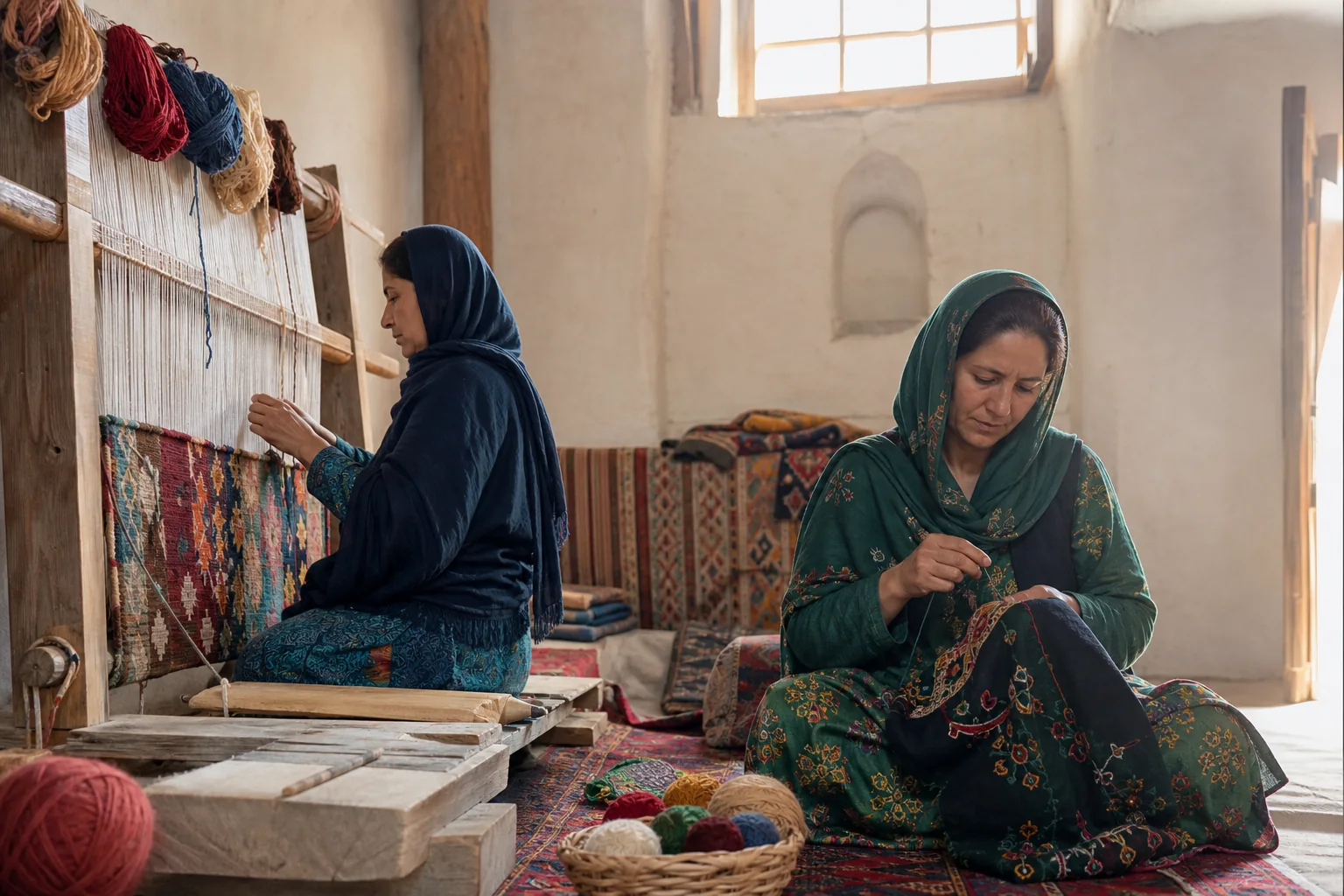
Handicrafts and carpets
Carpet weaving, embroidery, felt-making, woodwork, metalwork, pottery and jewellery connect household skill, regional identity and livelihoods.
Architecture
Earthen settlements, caravanserais, gardens, mosques, shrines, citadels and tiled monuments reveal changing materials, climates and historical influences.
Festivals and traditions
Nowruz, religious observances, harvest customs, weddings and local gatherings are marked in different ways across families and regions.
Cultural diversity
Afghanistan is home to many ethnic and cultural communities. Responsible presentation avoids reducing this diversity to a fixed or exhaustive list.
Places to explore
Landscapes and landmarks
Use these profiles as cultural inspiration, not as current safety or access guidance.
NatureBamyan Province
Band-e-Amir
A chain of intensely blue high-altitude lakes shaped by natural travertine dams in the central highlands.
Why it matters
Protected as Afghanistan’s first national park and included on UNESCO’s Tentative List.
Travel responsiblyProtect lake edges, carry waste out and follow locally issued access guidance.
HeritageBamyan Province
Bamyan Valley
A broad highland valley known for archaeological remains, cave complexes and living cultural landscapes.
Why it matters
The Cultural Landscape and Archaeological Remains of the Bamiyan Valley is a UNESCO World Heritage property.
Travel responsiblyUse authorized paths and never touch, climb or remove material from archaeological areas.
NaturePanjshir Province
Panjshir Valley
A dramatic valley north of Kabul, framed by steep Hindu Kush mountains and the Panjshir River.
Why it matters
Its geography, villages and mountain environment are central to the province’s identity.
Travel responsiblyAsk permission before photographing people or private property and use local guides where appropriate.
ArchitectureHerat Province
Herat Citadel
A monumental fortified complex whose successive layers reflect Herat’s long urban history.
Why it matters
The citadel forms part of a wider historic city celebrated for architecture, scholarship and the arts.
Travel responsiblyFollow conservation rules, avoid restricted areas and support accredited cultural guides.
ArchitectureMazar-e-Sharif, Balkh Province
Shrine of Hazrat Ali
Often called the Blue Mosque, this celebrated shrine is known for luminous tilework and an active devotional setting.
Why it matters
It is a prominent religious and architectural landmark in northern Afghanistan.
Travel responsiblyDress modestly, respect worship, ask before taking photographs and observe local access rules.
HeritageKabul
Gardens of Babur
A restored terraced garden laid out in the early sixteenth century and associated with the Mughal emperor Babur.
Why it matters
The garden demonstrates a major tradition of landscape design and remains an important public place.
Travel responsiblyRespect family spaces, planted areas and site-specific cultural guidance.
MuseumKabul
National Museum of Afghanistan
A museum collection representing archaeological and artistic traditions from across the country.
Why it matters
Its holdings help explain Afghanistan’s place in networks of exchange across Asia.
Travel responsiblyConfirm opening arrangements directly and observe all museum photography and security rules.
HeritageKandahar Province
Kandahar Heritage
The historic city and surrounding region contain shrines, old neighbourhoods and landscapes connected to long-distance trade.
Why it matters
Kandahar has influenced political, commercial and cultural history across southern Afghanistan.
Travel responsiblySeek local advice on access and photography, especially at religious and community sites.
Economy and key industries
Potential grounded in people, place and connectivity
Afghanistan’s economy is shaped by agriculture, domestic commerce, services, imports, regional trade and substantial informal activity. Constraints remain significant, so serious analysis must distinguish long-term potential from current operating conditions.
Reliable statistics are limited and are revised as new estimates become available. The figures shown here are labelled by year and should be refreshed from the source before formal use.
Population
43.84mWorld Bank · 2025GDP (current US$)
$17.78bnWorld Bank · 2024GDP per capita
$416.90World Bank · 2024Agriculture
Fruit, nuts, saffron, grains, livestock and horticulture support livelihoods and value-chain opportunities.
Mining and resources
Known mineral resources create long-term potential that depends on transparent governance, infrastructure and responsible development.
Construction
Housing, commercial buildings and public infrastructure create demand for materials, engineering and project services.
Logistics
Road corridors, border trade, warehousing, cold chains and customs services connect producers with regional markets.
Information technology
Software, digital services, outsourcing and a young technical workforce support a growing entrepreneurial ecosystem.
Telecommunications
Mobile and internet services underpin commerce, education, finance and delivery of essential services.
Energy
Solar, hydro, grid services and energy efficiency are relevant to households, industry and regional connectivity.
Manufacturing
Food processing, packaging, textiles, pharmaceuticals and building materials can strengthen domestic value chains.
Trade
Afghanistan’s location creates commercial links with Central Asia, South Asia, Iran and wider markets.
Handicrafts
Carpets, jewellery, embroidery and artisan products combine cultural knowledge with export and livelihood potential.
Professional services
Legal, accounting, consulting, translation, engineering and compliance expertise support formal business activity.
Entrepreneurship
Small and medium enterprises adapt to local demand across retail, services, technology and production.
Selected indicators: World Bank Afghanistan data . No trend chart is shown because revisions and data gaps can make simplified comparisons misleading.
MBCS business support
Planning to Do Business in Afghanistan?
Mirsamir Business Consulting Services helps local and international companies establish, operate and grow their businesses in Afghanistan.
Market entry
Business establishment, market assessment and practical entry planning.
Registration and licensing
Company registration, business licensing and administrative coordination.
Tax and regulatory guidance
Current-process orientation with referrals for specialist legal or tax advice where required.
Due diligence
Background checks, document review and risk-focused local verification.
Local partnerships
Partner identification, introductions and structured engagement support.
Tender and procurement
Opportunity monitoring, bid coordination and compliant document preparation.
Translation and documentation
Dari, Pashto and English language support for business and administrative materials.
Work permits and administration
Process support for authorized personnel and operational documentation.
Service scope depends on current law, regulatory practice and the needs of each engagement. MBCS coordinates specialist advice where required.
Practical information
Useful details for responsible planning
Designed as an editable reference layer—not a substitute for current official, legal, travel or emergency guidance.
Currency
Afghan afghani (AFN). Exchange and payment conditions can vary; confirm current banking arrangements before transactions.
Languages
Dari and Pashto are widely used. Interpretation may be valuable for business, legal and community engagement.
Time zone
Afghanistan Time is UTC+4:30 throughout the year; daylight-saving time is not currently observed.
Telephone
International calling code: +93. Mobile coverage and data quality vary by location.
Working week
Many offices operate Saturday to Thursday with Friday as the principal weekly holiday. Hours vary; confirm appointments directly.
Public institutions
Procedures, responsibilities and opening arrangements can change. Verify requirements with the relevant institution or qualified adviser.
Transportation
Road and air connections vary by route and season. Arrange transport through reputable local providers and check current conditions.
Climate
Afghanistan has strong regional and seasonal variation, from hot arid lowlands to cold, high-altitude winters.
Cultural etiquette
Dress modestly, ask before photographing people, use the right hand when offering items and follow hosts’ guidance.
Official and emergency resources
Before travel, consult your government’s current advisory, airline notices, insurance provider and trusted local contacts. Emergency systems vary by location.
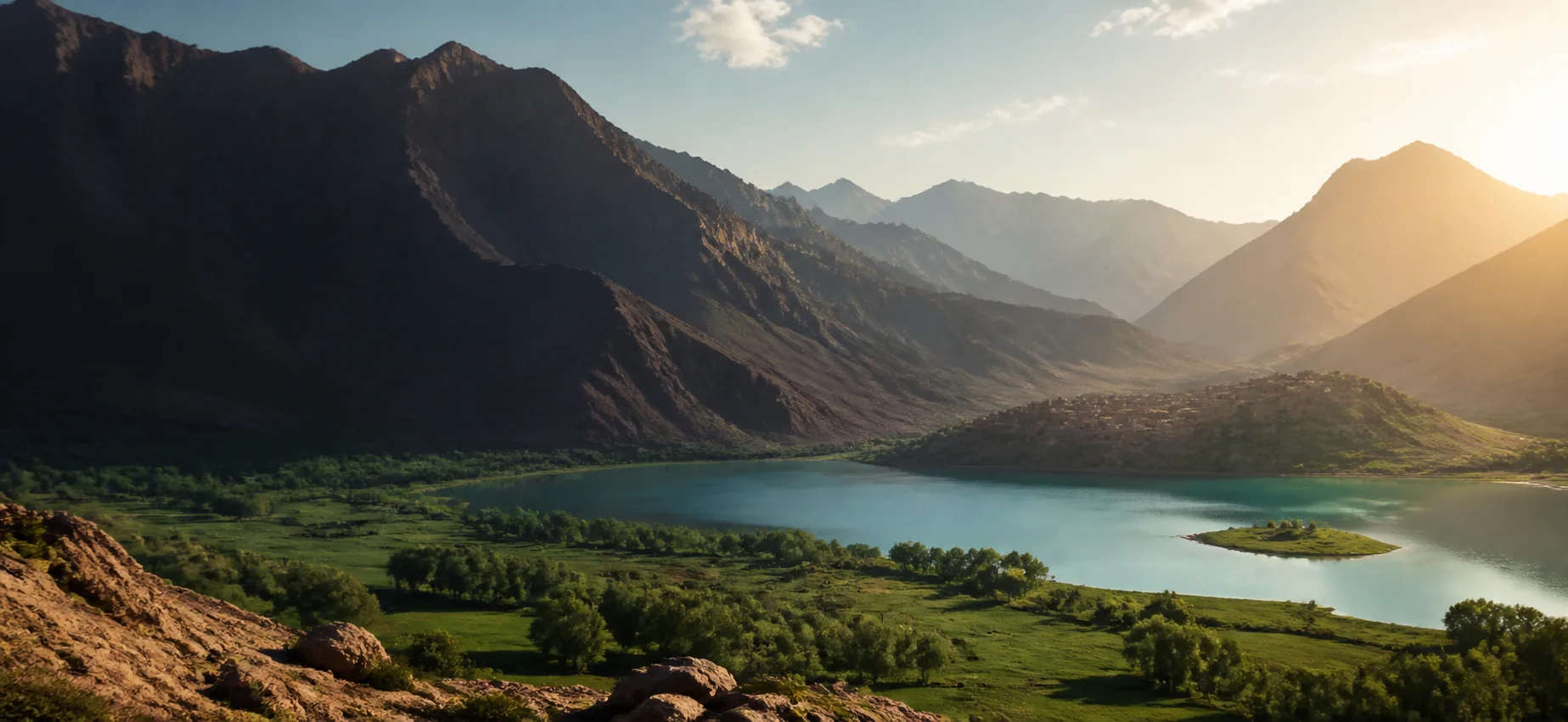
Afghanistan photo gallery
Four original visual stories
Project-owned, AI-generated editorial imagery is used transparently. It is representative, not documentary evidence of a specific site or person.
Frequently asked questions
Quick answers, responsible caveats
Start here, then verify changing requirements with the relevant official source or a qualified adviser.
Kabul is the capital and the country’s largest urban centre.
Dari and Pashto are the principal official languages. Many other languages are spoken by communities across the country.
The national currency is the Afghan afghani, with the ISO code AFN and symbol ؋.
Afghanistan has 34 provinces, which are further divided into districts.
Areas often assessed include agriculture and processing, logistics, energy, telecommunications, technology, manufacturing, construction, trade and professional services. Any opportunity requires current market, legal and due-diligence review.
Registration, licensing, tax and sector requirements depend on the activity and can change. Businesses should obtain current guidance from the relevant authorities and qualified advisers before filing.
MBCS provides market-entry support, registration and licensing guidance, due diligence, local partnership assistance, tender support, translation, documentation and administrative services.
No. This website offers general cultural and destination context. Check current official travel advisories, entry requirements, insurance conditions and trusted local information before any journey.
Dress modestly, respect religious and family spaces, ask before taking photographs, follow your host’s cues and seek local guidance when uncertain.
Contact MBCS
Turn local context into a practical next step
Tell us what you are planning. MBCS can help define the right market-entry, regulatory, partnership or operational support.
Confidential first reviewEnquiries are handled for business-consultation purposes.
Local and international clientsSupport shaped around your sector, location and stage.
Practical scopeClear deliverables, dependencies and specialist referrals.
Content and image attribution
Transparent by design
The four editorial visuals used on this site were generated specifically for this project using OpenAI’s built-in image-generation tool. They are representative compositions, not documentary records of a named place, event or identifiable real person.
Core statistical references include the World Bank’s Afghanistan data page. Heritage references are informed by UNESCO’s Afghanistan World Heritage pages. All third-party facts should be reviewed on a scheduled basis.